Porto or Douro Valley for Wine Tasting? Which Is Better?
Compare Porto and the Douro Valley for wine tasting, from Gaia Port cellars to vineyard wineries, and decide which experience is best for your trip.
Almost everyone who books a trip to Porto ends up asking some version of this question, usually two days before arriving: the Port lodges are a ten-minute walk across the river, and the vineyards are a 90-minute drive each way. Do you need to make the drive? The honest answer is that Porto and the Douro Valley are not competing versions of the same experience — they are two halves of one, and which half you should prioritise depends almost entirely on how many hours you have.
Check Availability
The short answer
Choose Porto and Vila Nova de Gaia for Port cellars and convenience. Choose the Douro Valley for vineyards, working wineries and scenery. If your trip allows it, do both — and do them in that order.
That is the whole recommendation, and the rest of this page is the reasoning behind it. The two places hold different parts of the same story: the grapes are grown, pressed and largely made 100km upriver in the demarcated Douro region, while a great deal of the ageing, blending and selling has historically happened in the lodges of Vila Nova de Gaia, directly across the water from Porto’s old town. Taste in one place and you get half the picture. Taste in both and the second visit explains the first.
One caveat before any of the specifics: prices, opening times and tasting menus at both the lodges and the quintas change with the season, and Port houses in particular rotate their tasting flights. Confirm what is actually included before you pay for anything.
Porto/Gaia: what the lodges do best
The Gaia lodges are the right answer to a specific set of questions — what Port actually is, how fortification works, why a Tawny tastes of nuts and dried fruit while a Ruby tastes of blackberry, and why the same house sells a bottle at €15 and another at €150. A cellar tour walks you between rows of enormous seasoned oak vats, gives you the vocabulary in about 45 minutes, and pours two or three glasses at the end.
The practical case is just as strong. Gaia is walkable from the Ribeira across the lower deck of the Dom Luís I Bridge, the lodges sit within a few hundred metres of each other, and a visit is an afternoon rather than a day. You can do two in one go, and be back for dinner in Porto.
The classic first stop: Porto: Taylor’s Port Cellars & Tasting — 4.57★ from 4,664 reviews, a self-paced audio tour through one of the oldest lodges in Gaia with a tasting at the end and peacocks in the garden.
The best-rated of the big lodges: Porto: Graham’s Port Lodge Tour with Premium Wine Tastings — 4.83★ from 1,983 reviews, on the hill above the river with the best view of the six of them.
The easiest to reach: Porto: Cálem Cellar Tour, Interactive Museum & Wine Tasting — 4.54★ from 5,044 reviews, right on the Gaia waterfront and the most-reviewed cellar tour in the district.
If you would rather taste than walk: Porto: Taste and Pair 5 Port Wines with a Wine Expert — 4.91★ from 599 reviews, a seated class covering five styles with food pairings, which is the fastest route to actually understanding the difference between them.
Our guide to the best Port wine tastings in Porto compares twelve lodges and experiences side by side, including the two — Kopke and Churchill’s — that are worth walking to even though they are not sold online.
The Douro Valley: what the vineyards do best
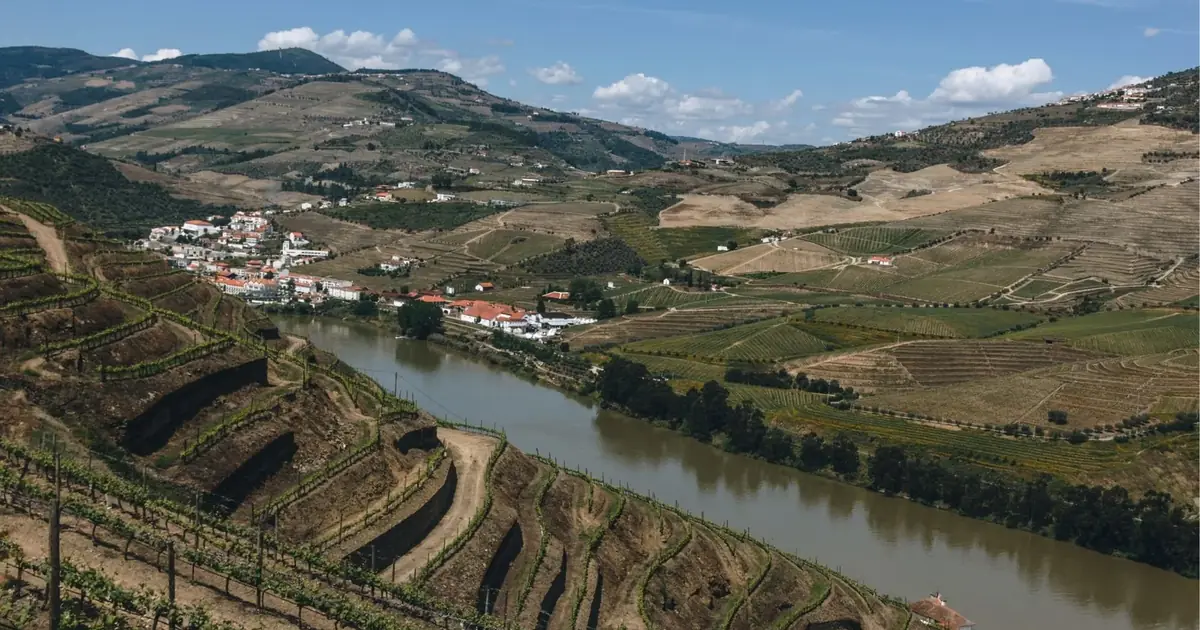
What the lodges cannot show you is the landscape that makes the wine, and it is a genuinely astonishing one: stone-walled terraces cut into schist hillsides by hand over three centuries, dropping several hundred metres to the water. The Alto Douro has been a UNESCO World Heritage landscape since 2001, and a demarcated wine region since 1756 — the first in the world.
A day in the valley gets you things Gaia structurally cannot offer. You stand in the vineyard whose grapes are in the glass. You taste Douro DOC still reds and whites, which barely leave Portugal and which most visitors have never tried. You eat a long lunch at a quinta. And you usually get an hour on the river, looking up at terraces that from water level are far more dramatic than they are from the road.
The benchmark day: From Porto: Douro Valley w/ Boat Tour, Wine Tasting & Lunch — 4.66★ from 22,334 reviews, from $64. Two wine estates, a one-hour Douro cruise, a sit-down Portuguese lunch and the drive along the N222 with photo stops, which is the itinerary most people mean when they say “a Douro Valley tour” (our full breakdown).
The wine-focused version: Porto: Douro Valley Wine Tour with a Sommelier & Boat Trip — 4.98★ from 766 reviews, from $145, the highest-rated tour on this site. Groups capped at eight, a certified sommelier hosting the day, and 15 wines across two family estates (breakdown).
Which estates you might actually end up standing on is covered in our guide to the 10 best wineries and vineyards in the Douro Valley, and what ends up in the glass at each stop is in our guide to Douro Valley wines and what to taste.
If you have only two hours
Stay in Gaia. This is not a close call. Two hours is not enough to reach the valley, let alone taste in it — the drive alone is around 90 minutes each way — and attempting it turns a wine trip into a coach trip.
Two hours in Gaia, on the other hand, is a complete experience: a cellar tour and tasting runs roughly 45 to 60 minutes, which leaves you time to walk between two lodges, or to do one tour and then sit down properly with a flight. For a first Port tasting with limited time, the five-Port class with a wine expert (4.91★, 599 reviews) does more per minute than a cellar walk, because it is entirely about what is in the glass. If you want the cellars themselves, Cálem is the shortest walk from the bridge.
If your two hours are in the evening rather than the afternoon, Porto: Cálem Cellar Tour, Fado Show & Wine Tasting — 4.44★ from 3,923 reviews — pairs the tasting with live Fado, which is a different kind of evening rather than a better tasting.
If you have a full day
Go to the Douro. A full day is exactly what the valley needs and exactly what Gaia does not: the lodges cannot absorb eight hours, and the valley cannot be done in less.
A standard full-day tour from Porto runs 7 to 10 hours door to door, of which roughly three are driving. What fills the rest is two estate visits, lunch and the boat. If you want a slightly different shape to the day, there are three worth knowing about:
- A second region instead of a second estate: From Porto: 2 Wine Regions, Farm-to-Table Lunch & Boat — 4.85★ from 8,518 reviews, from $110 — pairs the Douro with Vinho Verde for ten tastings, a farm-to-table meal and a private cruise (breakdown).
- The historic route rather than the road: Porto: Douro Valley Full-Day Boat, Train, and Lunch Tour — 4.75★ from 1,608 reviews, from $152 — retraces the way Port barrels actually travelled, by boat, train and road (breakdown).
- A cheaper, more flexible option: Porto: Douro Valley with Lunch (Optional), Tastings & Cruise — 4.73★ from 8,863 reviews, from $62 — adds a coffee stop in Amarante and is sold with a half-day version if a full day is more than you want (breakdown).
If you would rather reach the valley under your own steam, our guide to the best way to see the Douro Valley from Porto compares the guided tour against the Douro line train, a rental car, a private driver and a river day.
If you do not like Port
The Douro still works, and this is the single most common misconception about the region. Port is what the Douro exports; it is not what the Douro mostly drinks. Dry Douro DOC reds and whites are a major part of modern production here, they are poured at every estate on every tour, and because relatively little is exported they are the wines you are least likely to have tried and least likely to find again at home.
A day in the valley for a non-Port drinker looks like this: a fresh, mineral Douro white before lunch, one or two dry reds — often a Touriga Nacional blend — with it, and a token Port at the end that you are welcome to decline. Both the classic full day and the sommelier-led small-group day pour both styles across the day rather than treating Port as the destination.
Gaia, by contrast, really is about Port, and a lodge tour is a poor use of an afternoon if you know you dislike the style. Our Port wine vs Douro wine breakdown explains exactly what separates the two, and Douro Valley wines: what to taste covers the dry styles in detail.
Best order: which one first
For a first visit, do a Gaia cellar first and the Douro second. The terminology makes far more sense once you reach the vineyards: fortification, cask ageing, the difference between a Tawny and an LBV, the reason the region is demarcated at all. Learn the words in a cellar where someone is paid to explain them, and the tasting-room conversation at a quinta two days later goes from polite nodding to an actual conversation.
There is a practical argument for the same order too. Gaia is a flexible afternoon you can slot around a late flight or bad weather; a Douro day is a fixed, all-day commitment that has to be booked. Locking in the valley day first and filling the gaps with Gaia around it is how most well-planned Porto trips end up looking.
The exception is if you are staying in the valley overnight — in which case do the Douro first, then Gaia on your way out of the country, and treat the lodges as the epilogue rather than the introduction.
Side by side
| Porto / Vila Nova de Gaia | Douro Valley | |
|---|---|---|
| Time needed | 2–4 hours | A full day (7–10 hours) |
| Getting there | Walk across the Dom Luís I Bridge | ~90 min each way by road, train or boat |
| What you taste | Port: White, Ruby, LBV, Tawny, Vintage | Douro DOC whites and reds, plus Port |
| What you see | Cellars, oak vats, the river frontage | Terraced vineyards, quintas, the river itself |
| Best for | Understanding Port styles and the wine trade | Scenery, working wineries, a long lunch |
| Typical cost | Cellar tour and tasting, booked per lodge | From $23 for a cruise, from $62 for a full day |
| Book it | Taylor’s cellars & tasting | Two estates, cruise & lunch, from $64 |
FAQ
Is the Douro Valley worth it if I have already done the Gaia lodges? Yes, and arguably more so. The lodges show you where Port is aged and sold; the valley shows you where it is grown and made, in a landscape that is the actual reason the region is a UNESCO site. They are complementary rather than competing destinations, and doing one does not substitute for the other.
Can I taste Port in the Douro Valley itself? Yes. Every estate on a standard tour pours Port alongside its dry wines, and many quintas age some of their own stock on site rather than shipping it all downriver. What Gaia has that the valley does not is the concentration — a dozen historic houses within walking distance of each other.
Can I taste Douro DOC wine in Porto? Yes — Porto’s wine bars and restaurants pour a great deal of it, and it is the everyday drinking wine of the north. What you cannot do in Porto is taste it at the estate that made it, with the terraces in front of you, which is the part that changes how you think about it.
Is one cheaper than the other? Gaia, comfortably, if you are only counting the tasting. A cellar tour and tasting is a modest per-person cost with no transport attached, while a full-day Douro tour starts from around $62 and includes the driving, the estates, the boat and usually lunch. Per hour of experience the valley is competitive; as a single line on a budget it is not.
What if I only have one free day in Porto? Spend it in the Douro and fit a Gaia lodge into a different afternoon — even a spare 90 minutes before dinner is enough for one cellar tour. The valley is the thing that cannot be compressed.
Do I need to book either in advance? The Douro tours, yes — they are full-day departures with limited seats and they sell out in season. Gaia lodges can often be walked into outside peak months, but the popular slots and the seated tasting classes do book up, and booking online usually costs the same as booking at the door.
Is the Douro Valley better than Porto for a non-drinker? Yes, and it is not close. The valley is a landscape trip that happens to include wine — terraces, a river cruise, a long Portuguese lunch — and most tours offer grape juice at the tastings. A Gaia cellar tour without the tasting is a walk through a warehouse.
Still working out which day to book? Our guide to choosing the best Douro Valley wine tour from Porto works through the formats in turn, the best Douro river wine cruises sorts the vineyard boats from the Porto city ones, and Pinhão wine tours and tastings covers basing a day in the valley itself. Or compare all six Douro options side by side on the homepage.
Taste the Douro — Wine, Boat & Lunch, One Day
Join 22,000+ travelers who rated this trip 4.7/5. Two wine estates, a river cruise, and a traditional Portuguese lunch — all included. Free cancellation.
Check Availability & Book