Wine Tasting in Peso da Régua
Where to taste wine around Peso da Régua — Quinta do Vallado, Quinta da Pacheca, Seara d'Ordens, Alves de Sousa and the Douro Museum, with and without a car.
Peso da Régua is the Douro’s least glamorous important town. Pinhão gets the photographs and the tiled railway station; Régua gets the traffic, the supermarkets and the sense that people actually live here. That is precisely why it repays a tasting day: this is where the Port trade was organised, where the region explains itself, and where a cluster of serious producers sit within twenty minutes of the station in every direction.
Check Availability
Why Régua is worth a tasting day
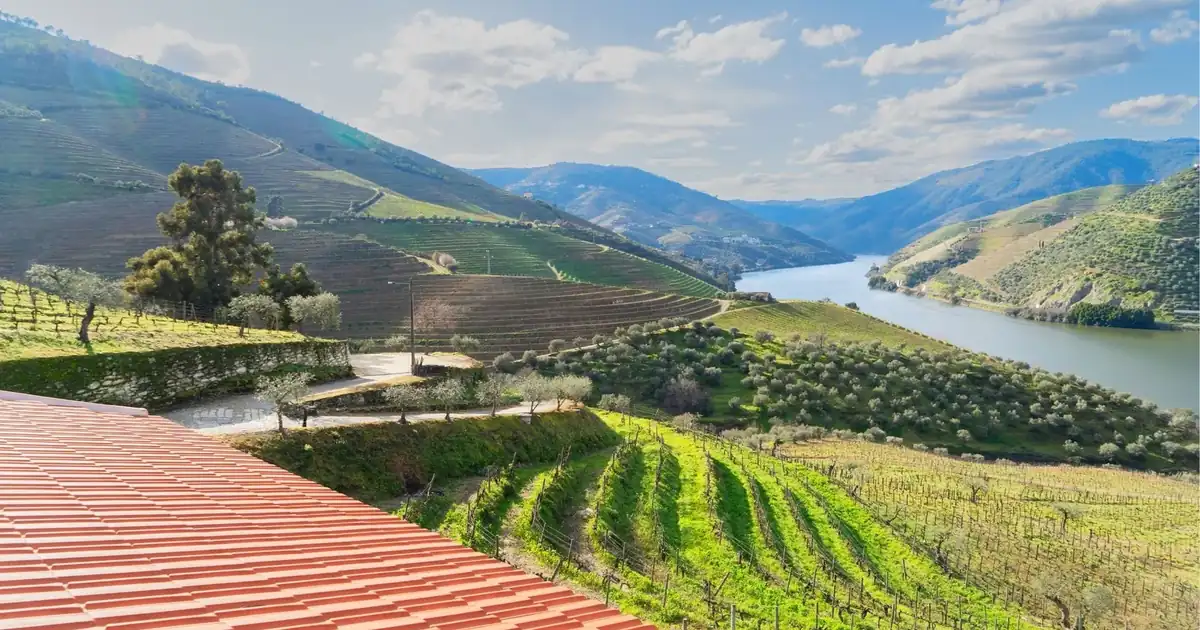
Régua sits at the point where the Corgo river joins the Douro, about 100 km east of Porto, and it is the historical western wine centre of the region — the gathering point from which barrels went downriver to the lodges at Vila Nova de Gaia for more than two centuries. It is also the capital of the Baixo Corgo, the westernmost and coolest of the Douro’s three sub-regions.
That sub-region matters more than it sounds. The Baixo Corgo is wetter and greener than the valley further east, and it produces more wine than the other two sub-regions combined while supplying less of the concentrated fruit that goes into the finest Vintage Ports. In practice, tasting here skews towards dry Douro DOC reds and whites, Tawny and everyday Ruby rather than the blockbuster Vintages you will be shown around Pinhão. If dry Douro wine is what you actually enjoy drinking, Régua is arguably the better base, not the compromise one.
Three practical advantages over Pinhão:
- More beds and more restaurants. Régua is a town of around 8,000 rather than a village of a few hundred, so an evening here has options.
- Better connections. It is the junction where the Corgo line once met the Douro line, and it remains the easiest place in the valley to arrive at, leave from, or hire a taxi at short notice.
- The museum. Nowhere else in the Douro explains the Douro.
The trade-off is honest: Régua is less beautiful and the estates are more spread out. Pinhão puts you in the middle of the postcard with quintas you can reach on foot. Régua puts you in a working town with better wine access if you are willing to arrange transport. Our guide to Pinhão wine tours and tastings covers the other end of that choice, and the Douro Valley wine route explains how the two towns sit on the same 27-kilometre road.
The estates worth booking around Régua
Four producers are worth planning a day around, and they are deliberately different from one another. Book all of them in advance — this is not optional in the Douro, and the smaller two may not take walk-ins at all.
Quinta do Vallado
The strongest all-round choice near Régua, and the one to pick if you want a single visit to carry the day. Vallado sits a few kilometres from the centre on the banks of the Corgo, dates from 1716, and was for most of its history part of the Ferreira empire — it is still run by Ferreira descendants. It makes both Port and a well-regarded line of dry Douro reds and whites.
What sets it apart for a visitor is that it is a genuine working winery with a polished visitor operation attached, rather than one or the other. There is a modern schist-clad winery building alongside the eighteenth-century house, and there are rooms, which makes it the obvious answer for anyone who wants wine plus an overnight rather than a day trip back to Porto. It is also close enough to Régua that a taxi from the station is a short, cheap hop.
Quinta da Pacheca
The most developed wine-tourism estate in the Régua–Lamego area, and the one you will have seen photographs of without knowing it. Pacheca is across the river on the south bank towards Lamego, and it was one of the first Douro estates to bottle and sell wine under its own name rather than selling in bulk to the Port houses — a genuinely significant break with how the region worked.
Today it is as well known for hospitality as for wine: a restaurant, a hotel in the old manor house, and the wine barrels converted into sleeping quarters that appear on every “unusual places to stay” list. Take that as a signal about the visit. Pacheca is the most comfortable and the most commercial of the four, and it is the right pick for a group with mixed levels of interest, a long lunch, or a first Douro visit where the setting matters as much as the pour. Serious wine drinkers sometimes find it a little smooth.
Seara d’Ordens
The useful smaller-producer option, and the antidote to the two names above. Seara d’Ordens is a family estate on the slopes near Régua that has been in the same hands for generations, and it is the sort of place where the person pouring is likely to be the person who made the wine.
Choose it if the wine hotels feel like the wrong register — if you would rather stand in a working cellar than a tasting room designed for coaches. Expect fewer set visit times, a smaller range, and a visit that depends more on who is there. Book further ahead and be flexible; that is the cost of the thing you came for.
Alves de Sousa
The one for people who are serious about dry Douro wine specifically. The Alves de Sousa family, based around Quinta da Gaivosa near Santa Marta de Penaguião north of Régua, are among the producers most credited with proving that the Baixo Corgo could make first-rank unfortified reds rather than only Port grapes — a large part of why “Douro DOC” is now a category outside Portugal at all.
Be realistic about the logistics. It is roughly twenty to twenty-five minutes north of Régua, it is not on the way to anywhere else on a Pinhão itinerary, and it is not built around drop-in tourism. This is a visit for a car or a private driver and a booked appointment, and it rewards people who already know they prefer a structured Douro red to a Tawny. If that is not you, one of the first three will serve better.
The Douro Museum
The Museu do Douro occupies the old Companhia Geral riverfront warehouse in the centre of Régua, and it is the best non-winery stop in the region — not a consolation prize for a rainy day, but the thing that makes everything you taste afterwards make sense.
It covers three things properly. First, the 1756 demarcation — the Douro was the world’s first officially demarcated and regulated wine region, decades before Chianti or Bordeaux, and the museum explains why a wine region needed a state monopoly and boundary stones in the first place. Second, the landscape as construction: the terraces are not a feature of the hillside, they are a structure built into it by hand over centuries, and the museum makes the scale of that labour legible in a way that a viewpoint cannot. Third, the trade — the barrel boats, the river before the dams, and the shift of power between growers, shippers and the British houses downriver.
Allow an hour, and go before the wineries rather than after. The single most common regret from a Douro day is having tasted at two estates and only afterwards understood what a quinta actually is, why the vineyards are laid out in three different terrace styles, or what “demarcated” means. An hour here first fixes all three. Our guide to what to expect at a Douro Valley wine tasting covers the rest of the vocabulary.
Régua without a car
Entirely doable, and the combination that works is train + museum + one pre-arranged estate.
The Linha do Douro railway runs from Porto’s São Bento and Campanhã stations to Régua in around two hours, and the last stretch, after the line meets the river, is genuinely scenic rather than merely functional. The station is in the middle of town, a few minutes’ walk from the riverfront and the museum. That much needs no planning at all.
The estates are the part that does. None of the four above is walkable from the station, so the realistic shapes for a car-free day are:
- Museum in the morning, one estate in the afternoon by taxi. Vallado is the natural choice — it is the closest and the transfer is short. Arrange the return leg when you arrive, rather than assuming a taxi will be waiting.
- Book an estate that collects you. Several of the larger quintas will arrange a transfer for booked visits; ask when you reserve rather than on the day.
- Take the train on to Pinhão (about 25 minutes further) if you want a walkable winery, and treat Régua as a museum-and-lunch stop rather than the tasting base.
The honest alternative is to let someone else drive. From Porto: Douro Valley w/ Boat Tour, Wine Tasting & Lunch — 4.66★ from 22,465 reviews, from $64 — is the only tour on this site whose route includes a stop in Peso da Régua itself, at the pedestrian bridge over the river, alongside two estate visits, a river cruise and a sit-down lunch (our full breakdown). It solves the transport problem and the designated-driver problem in one booking, at the cost of choosing your own estates.
If you are already staying in the valley, Pinhão: Douro River Solar Boat Tour with Wine Tasting — 4.81★ from 1,059 reviews, from $23 — is a one-hour engine-free cruise from Pinhão, 25 minutes up the line, and the cheapest way to see the terraces from the water (breakdown).
Régua with a car
With a car the calculation changes completely, and the right move is not to fit in more estates. It is to combine one western winery with the drive east.
The shape that works: museum or an estate in the morning, then the N222 towards Pinhão in the afternoon. That road — the 27 kilometres from Régua east along the south bank — is the single most scenic thing in the region and the reason to have a car at all. Add the Miradouro de São Leonardo de Galafura north-east of Régua on the way out or back; it is about 12 km up a switchback road and it gives you the view over the confluence that the town itself does not have.
Two rules. One tasting, then drive — Portuguese drink-driving limits are low, the N222 is narrow with no shoulder in places, and a second estate visit is where a good day turns into a bad decision. If both of you want to taste properly, that is an argument for a driver or a tour rather than a rental. And book the estate before you set off; arriving at a Douro quinta without an appointment is the standard way to be politely turned away.
Our comparison of the best way to see the Douro Valley from Porto works through the tour, train, rental car and private driver on cost and time, and the Douro Valley wine route covers the villages and viewpoints east of here if you have a second day.
Régua at a glance
| Best for | Getting there | Book ahead | |
|---|---|---|---|
| Quinta do Vallado | One visit that carries the day; wine plus a stay | Short taxi from Régua station | Yes |
| Quinta da Pacheca | Comfort, lunch, mixed-interest groups | Car or taxi, south bank towards Lamego | Yes |
| Seara d’Ordens | A working cellar rather than a tasting room | Car or taxi | Yes, well ahead |
| Alves de Sousa | Serious dry Douro reds | Car or driver, ~20–25 min north | Yes, essential |
| Museu do Douro | Understanding what you’re about to taste | Walk from the station | No |
FAQ
Is Peso da Régua or Pinhão better for wine tasting? Régua is better for history and for dry Douro wine; Pinhão is easier for a car-free winery-and-cruise day. Régua has the museum, more restaurants, more beds and the Baixo Corgo estates, but nothing you can walk to. Pinhão puts you in the most photographed stretch of the valley with quintas within a short walk or taxi of the station. For a first visit with no car, Pinhão; for a second visit, a longer stay, or a genuine interest in the wine, Régua.
Can I taste wine in Peso da Régua without a car? Yes. Take the train from Porto, visit the Museu do Douro on foot from the station, and reach one estate by taxi — Quinta do Vallado is the closest. Arrange the return trip in advance rather than assuming a taxi will be available. A guided day tour from Porto removes the problem entirely.
How long does it take to get to Peso da Régua from Porto? About two hours by train from São Bento or Campanhã, or an hour and a half by car on the A4/IP4. The train is slower but the final stretch along the river is part of the point; the motorway shows you nothing.
Do I need to book winery visits in Régua in advance? Yes, without exception. Most Douro quintas run visits at set times with limited places, and the smaller producers may not take walk-ins at all — particularly in summer and during the September–October harvest. See our season-by-season guide for when the pressure is worst.
Is the Douro Museum worth it if I only have one day? Yes, and go before the wineries rather than after. An hour there gives you the 1756 demarcation, the terrace-building and the barrel trade, and every tasting afterwards is more interesting for it. It is the only stop in the valley that explains the valley.
How many wineries can I visit in a day around Régua? One properly, or two if you are not driving and you skip a long lunch. The estates here are more spread out than around Pinhão, so travel time between them is real. One substantial visit plus the museum and a meal is a full, good day.
Ready to book rather than plan? Our guide to choosing the best Douro Valley wine tour from Porto compares the six tours on this site, the 10 best wineries and vineyards in the Douro Valley covers the estates further east, and Douro Valley wine tours with lunch explains the one inclusion that varies most. Or compare everything on the homepage.
Taste the Douro — Wine, Boat & Lunch, One Day
Join 22,000+ travelers who rated this trip 4.7/5. Two wine estates, a river cruise, and a traditional Portuguese lunch — all included. Free cancellation.
Check Availability & Book